Companies can't afford the hire they need. So they're paying experts like you a fraction of the cost — and you don't even have to quit your job.
AI is eliminating the junior roles. Remote work normalized the fractional hire. Senior expertise has never been more valuable — or more accessible to the buyer. This is what's happening, what the data shows, and how 45% of SpeakerHUB members are already cashing in on it.
Two forces just collided. You're standing in the middle of it.
Something quietly historic is happening in how companies hire — and most experts have no idea they're sitting on the most valuable position they'll ever hold.
Two macro forces collided in the last 36 months. Each one alone would have moved the market. Together, they created a category that didn't exist five years ago: the fractional senior expert. And the demand is outpacing the supply.
Force one: the AI squeeze. Junior knowledge work is the first thing AI replaced. Entry-level analysts, junior copywriters, first-pass coders, basic research, customer service tier-one — all gone or going. What didn't go? Judgment. AI has logic. It doesn't have context. It can't read a room, manage stakeholders, or know when the right answer in the spreadsheet is the wrong answer for the business. That work — senior work, judgment work — still needs a human.
Force two: the remote work normalization. When every meeting became a Zoom in 2020, something quiet happened in HR departments. Companies realized they didn't need a full-time VP of Marketing sitting in a $4,500-a-month Manhattan office. They needed someone who could lead a strategy call for two hours on Tuesday and a quarterly review on Thursday. That's not a $250,000-a-year job. That's a $4,000-a-month engagement.
The companies figured this out before the experts did. They've been hiring fractional CMOs, fractional CFOs, fractional product leads, fractional everything — for years now. Most experts are still applying for full-time jobs that aren't being posted anymore.
The math companies are running. And why you win when they do.
If you're an expert, the most useful thing you can understand right now is the math your future client is running in their head.
A mid-sized company needs senior marketing strategy. The old answer: hire a VP of Marketing. The new math looks like this.
Same strategic horsepower. Six times less expensive. No recruiter, no ramp, no benefits, no termination risk. The company gets to test the engagement for 90 days, scale up or scale down, and never pays for a single hour they don't need.
From the company's side, this isn't a downgrade. It's an upgrade. They're getting a senior strategist with 20 years of experience — instead of a "VP" they could only afford if that VP was 5 years out of an MBA. And the fractional expert is often more focused, more accountable, and more impactful because they're being measured on outcomes, not hours.
For the expert, this is the unlock. You don't need to land one $250,000-a-year corporate gig. You need to land four or five $4,000-a-month retainers. The math works in your favor at every level — easier to sell, faster to land, lower commitment from the buyer, and the income stacks.
The companies don't need 40 hours a week of you. They need 6 hours a week of your best thinking. The math has shifted, and most experts haven't noticed.
There are two career paths in this market. One pays in 100 speeches. The other pays in week one.
Most experts are accidentally walking the slow path. The fast path is the one they were never told about — because the coaches selling them on it don't make money teaching it.
The Performance Speaker
You get paid to perform. You stand on stage. You deliver your signature talk. You move audiences. Eventually — usually after 80 to 100 paid speeches — you start commanding $10K, $20K, $50K per gig.
- Takes ~100 paid speeches to hit full income
- Income is talk-by-talk, not retainer
- Heavy reliance on referrals and bureaus
- Premium fees, but unpredictable cadence
- Stops paying when you stop performing
The Strategic Speaker
You get paid to solve a problem. You consult, train, or advise. You command monthly retainers, project fees, or workshop budgets. The market doesn't care if you've spoken 100 times. The market cares if you can solve their problem.
- Can charge premium rates from week one
- Monthly retainer income, not gig-by-gig
- Speaking becomes lead generation, not the product
- Compounds: every client becomes a referral source
- Recession and AI-resilient — judgment doesn't automate
Here's what's interesting: nearly every successful speaker you've heard of runs both paths simultaneously. The keynote is the visible part. The consulting work is what actually pays the mortgage. Most experts only see the visible part and try to copy it — without realizing the income engine is hidden underneath.
If you're starting today, you don't have to choose. You start as a strategic speaker — selling expertise — and you build your keynote skills along the way. The strategic path pays you immediately and funds the rest.
What the survey shows. 4,830 speakers don't lie.
We surveyed 4,830 speakers, thought leaders, and experts across more than 100 countries. The data on who actually makes money is dramatically different from what most coaches teach.
Here's what stood out.
Nearly half of SpeakerHUB members already do this. They've already figured out — quietly, without ever calling themselves a "consultant" — that selling expertise to companies pays better than selling tickets to talks.
But the more interesting data is what happens to their speaking fees once they add consulting to the mix.
Read those numbers again. Speakers with a consulting offer are 2.2x more likely to command premium speaking fees and 2.3x more likely to earn $50K+ from speaking alone. The consulting work isn't competing with their speaking income. It's multiplying it.
Why? Because when a company hires you for consulting first, the speaking engagements come later — and they pay more. You're no longer "a speaker we're auditioning." You're "the expert we work with, who also delivers a great keynote." That positioning shift is worth multiple times the fee.
You don't have to quit. In fact, you shouldn't.
Here's the single piece of advice that separates this from every other "become a consultant" pitch you've ever heard.
Don't quit your day job to start. Use it as your launch pad.
The remote work revolution didn't just change how companies hire. It changed how experts can operate. Five years ago, becoming a fractional consultant meant taking a financial cliff dive — quit the salary, hope you can replace it, scramble. Today, the entire economics of side-hustled consulting have flipped.
The pattern that works: keep your job, build the consulting practice on the side, prove the model with 2–3 paying clients, and only then decide if you want to go full-time. Most don't. Most discover that they prefer the hybrid — a stable base income plus high-margin consulting on the side. That combination is more financially secure than either alone.
And — quietly — it makes you more valuable in your day job too. Employers notice when someone is generating outside income from their expertise. It signals seniority, network strength, and market value. The people I know who started side consulting often ended up with internal promotions and raises within 12 months. Their employer didn't want to lose them.
The members who are doing this right now. Some of them started last quarter.
Every quote below comes from a live SpeakerHUB co-working session. Real members, real numbers, real timelines.




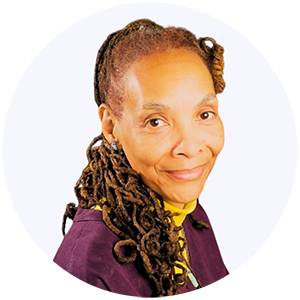

These aren't outliers. They're the pattern. Every one of them started without quitting a job. Every one of them used SpeakerHUB's system to fill the pipeline. And every one of them is now doing both — speaking AND consulting — in a way that compounds.
Start free. Get traction. Then learn how the high-earners actually do it.
There are two ways to begin, depending on where you are right now. Pick whichever fits — or do both.
Create a free SpeakerPAGE
Three minutes. No credit card. Get a SEO-ranked profile that shows up when companies Google your name. Start building the visibility layer that makes everything else easier.
Create Free SpeakerPAGE →Watch the IEA training
The Independent Experts Academy is our deep-dive training on how SpeakerHUB members are turning expertise into consulting income — without quitting their jobs. Free 90-minute webinar.
Reserve Your Seat →The SpeakerPAGE handles the visibility. The IEA training handles the strategy. Together they're the front door and the playbook for what comes next.
The expertise you already have is the asset companies are looking for.
You don't need to quit. You don't need to rebrand. You don't need another certification. You need a system that turns what you already know into income the market is already paying for.