I was the advisor who wouldn't run ads. Here's what I figured out instead.
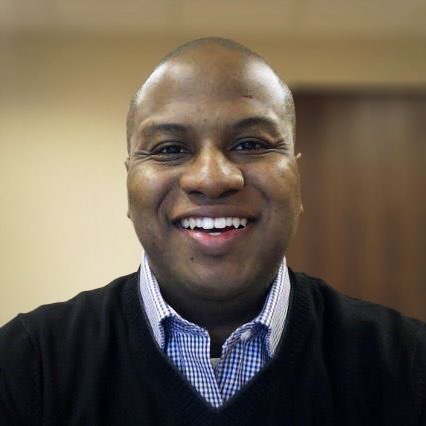
First, the short version of how I got here.
I'm going to write this the way I'd say it on a call with you. Not in marketing voice. Just plainly.
I grew up in East St. Louis, Illinois. My first business was collecting and recycling aluminum cans so I could buy the toys I wanted. The kids on my block thought it was strange. I thought it was the most obvious thing in the world: if you want something, you build a system to go get it. Nobody hands it to you.
By 21, I was selling insurance. By 25, I was broke and starting over. Over the next two decades, I built, bought, and led more than thirty companies — across media publishing, real estate, trucking, financial services, and software. Some of them worked. Most taught me expensive lessons. Every one of them sharpened the same skill: getting in front of the right people and turning conversations into clients.
If you've spent ten or twenty years in your own profession — law, accounting, financial advisory, fractional executive work, consulting — you already know this skill. You just maybe haven't named it yet. You're already good at the part everyone else struggles with: closing in the room. The reason you're reading this is that you suspect the bottleneck isn't your skill. The bottleneck is the number of rooms.
You're right.
A Facebook ad consultant wanted $2,000 a month from me. Then I tried to do it myself.
Years ago, a Facebook ad consultant pitched me on running ads for one of my companies. The deal was $2,000 a month for him to run the campaigns — and that was just his fee. On top of that, I'd pay separately for the video editing. The images. The ad spend itself. Realistically, I was looking at four to five thousand dollars a month before a single lead came through the door.
I almost said yes. He had case studies. He had slides. He had answers for every question I asked.
What stopped me wasn't the price. It was the pattern I'd already been watching.
I had several friends who had tried this — some running ads themselves, others hiring consultants like the one across from me. The pattern was the same in both directions. The complex funnels. The pixel setup that nobody could quite explain. The ad platforms that made it impossible to understand where the money was actually going. They'd spend six or nine or twelve months on it, give up, and never quite figure out what they'd done wrong.
So before I committed, I decided to try it myself. I gave it an honest shot. And I got confused. The interface was a maze. The strategy underneath the tactics was opaque. I couldn't draw a clean line between what I was doing and what I was trying to accomplish.
Then I did the thing I always do when something doesn't click — I went and talked to the people selling it. Different consultants. Different agencies. I had honest conversations about what they actually did, day to day, for their clients. And what I found was that they were just as confused as I was. They had a process. They could run a checklist. But they couldn't articulate the underlying strategy clearly enough to defend it under questioning.
That's when I quietly closed the door on the whole category.
I had a small practice. I needed two new clients a month. I did not need a thousand leads. The complexity of what was being sold to me was wildly disproportionate to what I actually needed to grow.
So I went back to what was working. I went back to referrals.
After a while in business, you run out of warm referrals. And that's not the worst part.
For a long time, referrals were the entire pipeline. Most advisors I know would say the same thing about their own practice. I only ever needed five to ten clients at a time. I didn't need a thousand leads. Referrals filled the calendar, and the conversations were warm enough that closing felt natural.
Then — somewhere around year five, year ten, year fifteen — something shifts.
You run out of warm referrals. Not all at once. Gradually. You notice the calls slowing. The same names start coming up. Your best referrer goes through a quiet quarter, or retires, or moves out of your line of work. And there's no obvious reason for it — you haven't gotten worse at your job. You haven't done anything wrong. The math just runs out.
It happens to every advisor I've ever known, regardless of industry. And the reason is structural. The conventional advice we've all been taught is to ask for referrals from your paying clients. That's the script. That's what every business development book says. The problem is that it limits your referral pool to people who have already hired you — which is a small number to begin with, and which can only refer you so many times before they get a little annoyed.
Meanwhile, you've provided real value to a much larger group. People you helped at networking events. People you gave free advice to on a phone call. People who watched you on a panel and never approached you. All of them would happily refer you. Nobody ever asks them.
But none of that is the real problem with referrals.
The real problem took me years to figure out. And once you see it, you can't unsee it.
When someone refers a client to you, what's actually happened is that a person they trust said, "you should talk to Ron." That's it. It's a suggestion. A vote of confidence. A nudge in your direction.
The lead still has to be sold. They still need to be convinced. They still need to evaluate your fee, your process, your style, and whether they actually trust you yet — independent of whether their friend does. The trust that referrer had with them does not fully transfer to you. It buys you a meeting. It does not buy you a client.
If referrals were truly pre-sold, every advisor with a strong referral base would be at capacity. Most aren't. Even the warmest referral closes at somewhere between thirty and sixty percent. Which means even the best person in your network is sending you leads that still need real selling.
I needed something better than that. I just didn't know what yet.
I didn't figure this out from a coach. I figured it out by watching my own results.
The shift didn't come from a course. It didn't come from a mastermind. It came from a pattern I started noticing in my own business — and it took me longer than it should have to name what I was looking at.
I'd been speaking on panels at coworking spaces and networking groups. It was casual. Low pressure. Nothing felt like marketing. Just showing up, answering questions on stage, and going home. But the inbound I got after those events looked nothing like the inbound I got from referrals.
People who heard me speak — even briefly, even on a panel I shared with three other people — would reach out afterward already convinced. Not "I'd like to learn more about your services." Not "Can we set up a discovery call." More like: "I'm in. How do I start?"
Sometimes they'd contact me that same day. Sometimes weeks later. Occasionally months later, when whatever problem they had got bad enough to act on. But the pattern was consistent — even when they didn't buy immediately, they remembered me, and they came back when their pain was great enough that they wanted to move forward.
They weren't cold leads. They weren't even warm referrals. They were already sold. By me. During the talk. The host or the organizer had brought a room of warm prospects together, and putting me on stage was effectively a referral to all of them at once. Pre-sold. In bulk.
Then I started paying attention to my own buying habits — and the pattern was the same on the other side of the transaction.
I bought a book from someone I'd heard on a podcast. Then another book. Then a course. Then a higher-priced program. Every one of those purchases traced back to a podcast appearance I'd listened to weeks or months earlier. I hadn't followed an ad. I hadn't entered a funnel. I'd just heard someone speak in a context I trusted, and when I was ready to spend, I went and found them.
If that was true for me — and I was relatively skeptical, relatively careful with money, relatively senior in my own field — then it was almost certainly true for the kind of clients I wanted.
I started telling everyone I knew. In 2012, I was consulting for software companies, and I'd recommend the same thing to every founder I worked with: go on podcasts. Not for traffic. Not for branding. For leads. For pre-sold leads. The interview becomes content you can share on LinkedIn after — but the bigger value is that you've just been given the warmest possible introduction to an audience that already trusts the host.
Most of the founders didn't do it. The ones who did changed their businesses.
The first podcast I ever did was Jason Cass's show. I got several clients from it.
Jason Cass hosted a podcast for insurance and financial services agencies — about how to scale their operations. At the time, I was doing consulting for a software company out of St. Louis. I went on Jason's show to talk about how agencies could use marketing automation to nurture leads over time.
I got several clients from that one interview. Not maybe. Several. From one hour of talking on someone else's show.
But here's the part that mattered even more.
After the interview aired, I started sending the recording to agencies I was cold-pitching, as a way for them to get to know me before our first call. The interview did the warming for me. By the time they got on the phone, they'd already heard how I think, what I knew, what I sounded like when someone smart was questioning me. The interview did the trust-building work that a website or a cold email could never do — in less time, with more credibility, because it wasn't me selling. It was Jason interviewing me, and his audience trusted him.
That was the mechanism. I just didn't have the full vocabulary for it yet.
I kept going. I did more podcasts. I started hosting my own. By the time I'd combined two hundred appearances — as a guest and as a host — the pattern was undeniable, and I finally had clean language for what I was looking at.
The audience had been pre-warmed by the host's months or years of building trust with them. The introduction was loud, generous, and specific — "you're going to love this next guest because…" Then I got to talk for forty-five minutes about something I knew cold, with someone who was trying to make me look good for the audience's sake.
It wasn't a marketing channel. It was a relationship channel running at scale.
I built the rest of my career on that insight. The most specific proof I can give you of how it actually works is what I did to grow SpeakerHUB itself. I personally delivered thirty-nine speaking engagements and recorded one hundred twenty-five podcast interviews as a guest. That combination — stages and podcasts, repeated consistently for a couple of years — is how I 5X'd the company's revenue.
Zero ads. Zero funnels. No paid traffic. No complicated tech stack.
Just the same mechanism I'd discovered on Jason's show, applied with discipline.
I bought SpeakerHUB thinking speakers were the audience. I was half right.
Once I had the playbook for my own business, the next question was whether I could systematize it for other people.
I bought SpeakerHUB because I thought speakers were the obvious audience. They already enjoy talking. They have stages. They have podcasts. They have what should be a natural funnel from one to the other. The math seemed clean.
I was half right.
What I learned is that speakers like to talk — but most of them don't like to sell. They want to be invited. They want to be hired. They want the booking agency to call them. The proactive part — the part where you reach out to a hundred podcast hosts a week with pitches that might get ignored — doesn't come naturally to most speakers. They're allergic to it.
But the consultants, advisors, CPAs, attorneys, and fractional executives who use speaking as a business development channel — they get it. They aren't precious about being interviewed. They don't mind giving a free thirty-minute talk if it produces the right two clients. They see the math the way I see the math: the stage isn't the product. The relationships you build from the stage are the product.
That audience — not the keynote speakers, but the consultants who use speaking — is the audience that 5X'd the company.
I expanded the infrastructure from there. We acquired Guestio because most podcast guests already have a product or service to promote — they're already trying to do what I'd figured out by accident on Jason's show. They just didn't have the data, the tools, or the system to scale it. We added live stages. We added print media. We added a CRM purpose-built for tracking pitches and follow-ups so nothing falls through the cracks.
The infrastructure today is real. Three and a half million podcasts in the searchable database. Two hundred thousand associations. Fifty thousand conferences. An AI engine that generates pitches in your voice. A free SpeakerPAGE that ranks on Google the moment a podcast host or event organizer looks you up. A CRM that routes every reply back to your normal inbox so there's no separate tab to check.
The whole thing runs on about fifteen minutes a day of pitching. That's the entire commitment.
That last part matters more than most people realize. The reason advisors avoid this isn't that they don't think it would work. It's that they imagine it would feel like marketing — and they're allergic to feeling like marketers. The good news is that it doesn't feel like that, if you do it right. It feels like teaching. The selling happens later, on a follow-up call, and by then the person on the other end has already convinced themselves.
This is what my inbox actually looks like. Every time.
Everything I've described up to this point — bulk pre-sold referrals, the warmest possible introduction, just taking the order — sounds like a sales claim. So let me stop describing it and show you.
What you're about to see are screenshots from my LinkedIn inbox. Real messages. Real names. Real credentials. Nothing curated. Pulled from a stretch of months. Every one of them is someone who heard me on a podcast, watched a YouTube video, or attended a live event — and then reached out to me, unprompted, often with a buying signal already attached.


Look at who's sending these. Dr. Gregory A. Dr. Raykel T. Kristoffer K., a venture capitalist. John G., an investor in Black-owned tech companies. Natricia P., MBA — who literally writes, "I feel primed to get booked now." That is the textbook definition of a pre-sold lead.
Notice what's missing from these messages. Nobody is asking, "What do you do?" or "How much do you charge?" or "Can I learn more about your services?" That's what cold leads ask. These messages all assume the prospect already knows what I do and is ready to move forward. "Do you have an hour consult package I can purchase?" — Denis E. That's not a lead. That's an order.
This is what running the system looks like. Not a viral spike. Not a launch. A steady, predictable, compounding pipeline of credentialed senior professionals who already heard me think, already heard me teach, already decided they want to work with me — and are now in my inbox, asking how.
If you want to see what happens after these conversations become clients, my team keeps a continuously updated list of full testimonials and outcomes at wwv.speakerhub.com/recent-results. The inbox above shows you the inbound. That page shows you what happens next.
The inbound becomes the outcome. Here's what that looks like downstream.
The DMs in the previous chapter are the front end. What you're about to see is the back end — what happens when those warm conversations become real engagements. Same audience. Same mechanism. Different time horizon. One attorney is a particularly clean example.
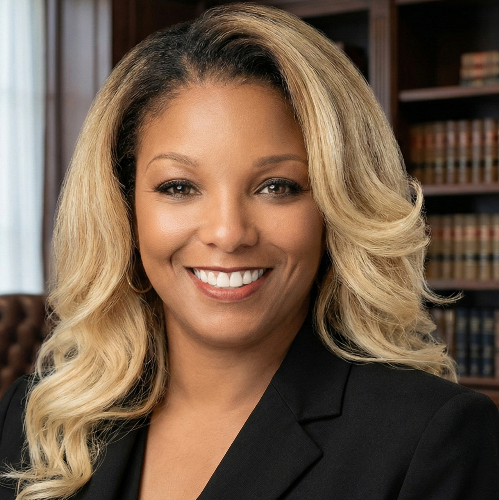
One stage. Four airlines. A paid committee role. An NDA with a Fortune 500 company.
Nichole didn't pitch any of those companies cold. She didn't run an ad. She didn't build a funnel. She got into one room — and the room itself was the introduction to four more rooms.
That's the compounding part. Every appearance produces the next two or three. The flywheel speeds up the longer you run it.
A few more from across the network:


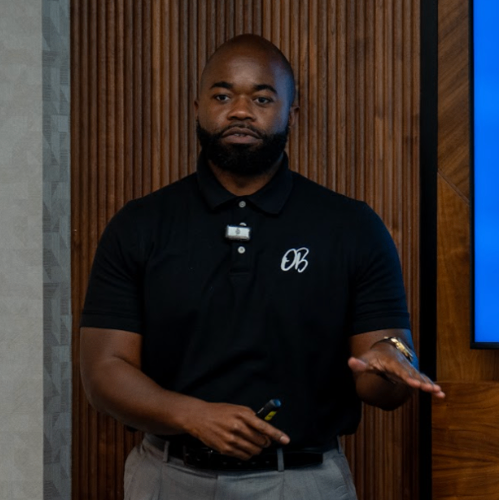
These aren't isolated wins. They're the pattern. Every single one of these consultants uses speaking and podcasts to get clients. None of them ran an ad campaign to land what you just read.
If you want to see hundreds more, my team keeps a continuously updated list at wwv.speakerhub.com/recent-results. Pick the closest match to your profession and your practice — and read what that person is saying about how the system works for them.
Let me be honest about what this call actually is.
I'm not going to pretend it's a free consultation. I'm not going to call it a strategy session and quietly hope you don't notice you're being sold to. I respect this audience too much to play that game.
It's a sales call.
I'm trying to sell you. I'm not on the call to provide advice. I'm not on the call to give you a free diagnostic. The purpose of the call is to figure out whether the strategy I've built — and the system we run inside SpeakerHUB — is a fit for you. If it's a fit, I'll sell you on it. If it isn't, I'll tell you, and we'll part as friends.
You've spent your career doing exactly this kind of work. You sit across from people who need your services, and you either turn out to be the right fit or you don't. You know what a sales call is. You know how to evaluate one. The least I can do is be transparent that this is what's happening.
Here's the actual qualifying criteria.
The reason I'm specific about six months is that everyone struggles to change their habits at the beginning. The first month is awkward. The second month feels slow. By month three, you start to see the first bulk pre-sold referrals show up unannounced. By month six, you've built enough momentum that the practice starts running itself.
If you can commit to six months of doing the work, book the call. If you can't — or you're hoping for a faster route that doesn't require the habit change — save us both the time.
The work isn't hard. It's just consistent. And consistency, run over six months, separates the consultants who fill their calendars from the ones who keep trying funnels and ads and wondering why nothing works.
Book a sales call. I'll tell you straight if this is the right fit.
Fifteen minutes on my calendar. I won't pretend it's a free consultation — I'm trying to sell you on a six-month commitment to stages and podcasts. If you're ready to do the work, let's talk. If not, no hard feelings.