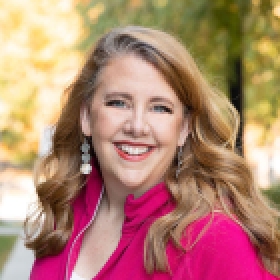
Shannon Smith
Founder • Expertise Untrapped
Woodbridge, Virginia, United States •
Request Pricing
About
Most speakers on knowledge transfer come from one of two directions: they are researchers who have studied expert performance in controlled settings, or they are consultants who have observed it from the outside. Shannon approaches it from both directions at once, and from the inside. She holds dual graduate training in instructional design and industrial-organizational psychology, which means she reads the same problem through two disciplinary lenses simultaneously: how people learn and transfer knowledge, and what actually drives behavior, judgment, and performance in organizations. That combination is not common in the speaking space. She also works daily as a senior staff development trainer inside a large organization. The problems she speaks about are problems she manages in real time. That grounding is the difference between a talk that sounds credible and a talk that is credible. Her Expertise Translation Method is built on a documented finding: experts omit 40 to 70 percent of what they do when asked to describe their own process. That finding creates a coherent problem statement for organizational audiences. Asking your top performers to write it down will not work, because the people you are asking to do it genuinely cannot see their own expertise clearly enough to complete the task. Shannon's sessions reframe the problem and show what actually changes the outcome. For organizations in regulated industries managing AI adoption, leadership transition, or succession risk, the research-practitioner combination is not a credential flourish. It is what makes the work applicable rather than aspirational.
Speaking Topics
Signature Programs (1)
From trapped expertise to shared capability A handful of people know how your most important work really gets done. Most of what they know has never been written down or made usable by a system, and it walks out the door with every retirement, reorg, and resignation. That is not a documentation problem. It is a translation problem. When people master a skill, the steps go underground and become invisible even to the expert performing them. That is why your best people cannot simply write it all down, and why your knowledge and AI initiatives stall on the very expertise they were meant to capture. The Expertise Translation Program closes that gap for an entire function or set of high-risk roles. I work with your experts to surface what they actually do, decode the judgment inside it, and translate it into shared language and decision tools your team can use without that expert in the room. Then I train an internal team to run the Method themselves, so the capability stays after I am gone. You are left with a working library of your hardest-won knowledge and the people who know how to keep building it. If your most critical expertise lives in too few heads, this is the work that makes it transferable while you still have time.
Key Takeaways
- Your team will be able to recognize where critical knowledge is concentrated and fragile, and name the key-person dependencies that quietly put the organization at risk.
- Your experts will surface the parts of their own process they could never explain before, including the judgment that had become so automatic they no longer noticed they were using it.
- Your team will hold shared language for the decisions that used to live in one person’s instinct, so the same words carry the same meaning across the whole group.
- Your internal facilitators will know how to run the Expertise Translation Method on a new knowledge area without outside help.
- Your leaders will be able to tell the difference between a documentation problem and a translation problem, and direct future investment accordingly.
Your Experience with Shannon
Your perspective matters!
What was it like engaging with Shannon?