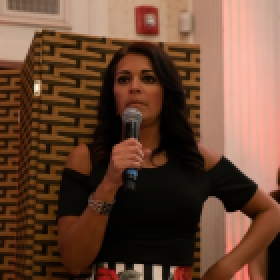
Nina Etienne
Global VP Marketing • SumUp
Germany •
$1,501 - $5,000
About
An experienced female executive who shares her stories to make people feel and act differently.
Speaking Topics
Signature Programs (4)
Women represent half of the world’s population, half of the world’s potential, half of the world’s hopes. Most of us would confidently agree with the United Nations that gender equality is a fundamental human right and a “necessary foundation for a peaceful, prosperous and sustainable world.” Yet if we look at any brand’s social media post on International Women’s Day, we’re instantly confronted with our far from equal society. And, worryingly, the post-covid trends are threatening the already slow pace of progress. Indeed the World Economic Forum tells us it will take 132 years to get to gender parity. That’s 5 generations: so our great-great grandchildren’s grandchildren have a chance to live in a gender equal world (should the climate allow). If we zoom in on the world of work, gender inequality continues to persist across boardrooms. In this presentation Nina explores the critical need to address gender imbalance to drive growth and retain talent
Over the course of our careers, it’s likely that all of us have — at one point or another — had an interaction with a manager, colleague or leader that felt off. An indirect or insensitive comment said about us — or to us — that jarred with our sense of self. Something that we almost didn’t notice — a casual aside, a joke, a throwaway comment, a whispered remark — that undermines our identity, leaving a bad taste long after the moment has passed. These careless expressions or assumptions that focus in on our identity — our gender, sexuality, whether we have children or choose not to, our socio-economic status, our race, our education, how we choose to dress — are known as “microaggressions” (a term coined by Harvard University Psychiatrist Chester M Pierce). In this presentation Nina explores the macro impact of microaggressions on psychological safety and team effectiveness, and how leaders and teams need to avoid them in the workplace and be more mindful and intentional.
We’re a long way off from gender equality. When it comes to the world of work, women continue to face struggles, obstacles and systemic barriers, alongside — and driven by — deep societal stereotypes. As a working woman, it can feel relentless: no one wants to hear that the pace of change is slowing. But it is. We seem to be stuck on an endless conveyor belt of slow-paced evolution rather than a more game-changing revolution. Every year core data points on crucial gender ‘success metrics’ such as the gender pay gap or female representation at executive level increase by a mere handful of percentage points. And this is lauded as success. But even these increases don’t always show the full picture. In this presentation Nina takes a look at the gender imbalance in the workplace and questions whether day to day allyship of women could be the answer. She leads with 10 tips from her experience on how to be an ally in the workplace and the impact this has on revenue and team health.
Your Experience with Nina
Your perspective matters!
What was it like engaging with Nina?